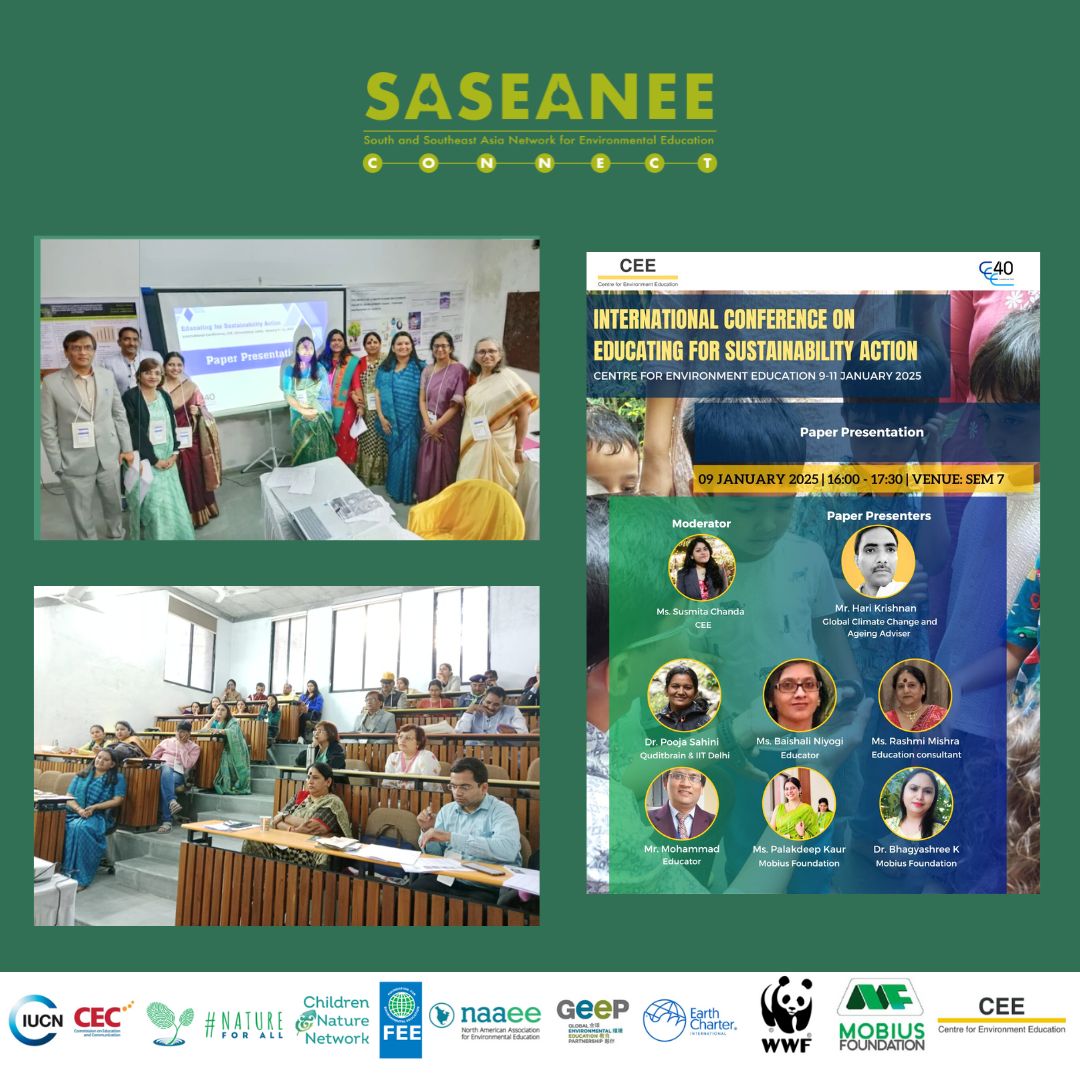
The SASEANEE team organized a Paper Presentation Session on 9 January 2025, bringing together educators, researchers, academics, and representatives from non-governmental organizations to share research and experiences related to sustainability education, climate action, and environmental learning. The session provided a platform for knowledge exchange and critical discussions on emerging challenges and opportunities in advancing education for sustainability The presentations covered a diverse range of topics, including climate change education, indigenous knowledge systems, behavioural approaches to environmental learning, sustainability integration within educational institutions, and the impacts of climate change on schools and communities. Several papers focusing on curriculum development and the integration of sustainability concepts into educational frameworks were subsequently featured in a dedicated Green Curriculum Session.
Mr. Hari Krishnan, Global Climate Change and Ageing Adviser, highlighted the importance of integrating older people, particularly indigenous elders, into environmental education processes. He emphasized the value of intergenerational learning and the need for policy frameworks that recognize and utilize traditional knowledge systems.
Ms. Baishali Niyogi, TGT at DAV School, presented findings on climate change education within K–12 curricula. Her research identified gaps in current approaches and highlighted the effectiveness of experiential and activity-based learning methods in enhancing students’ understanding of climate-related issues.
Ms. Rashmi Mishra, Education Consultant, discussed challenges associated with sustainability education, including superficial implementation, curriculum overload, and the limited emphasis placed on environmental education within mainstream learning systems.
Dr. Pooja Sahni from IIT Delhi and Quditbrain explored the role of behavioural neuroscience in environmental education. She stressed the importance of fostering emotional connections with nature and creating immersive learning experiences from an early age to encourage long-term pro-environmental behaviour.
Addressing climate resilience within educational settings, Mohammad Asif highlighted the vulnerability of schools and children to climate change impacts. He shared examples of adaptation measures being implemented to reduce health risks and strengthen resilience within school communities.
Ms. Palakdeep Kaur and Dr. Bhagyashree Kesherwani from the Mobius Foundation examined the role of global conferences and collaborative platforms in advancing sustainability education. Their presentation highlighted how such forums facilitate knowledge sharing, partnerships, and collective action towards sustainability goals.
The session benefited from the valuable insights of expert panelists Dr. Janki Shah, Programme Director, Sustainable Lifestyles and Traditions, Centre for Environment Education, and Ms. Madhavi Joshi, Senior Programme Director and Director, SASEANEE Connect, Centre for Environment Education. Their reflections enriched the discussions and provided participants with broader perspectives on sustainability education and practice.
The Paper Presentation Session served as an important platform for sharing innovative ideas, research findings, and practical experiences. It encouraged dialogue among participants and reinforced the importance of collaborative learning and evidence-based approaches in advancing sustainability education and action.

 Sign In