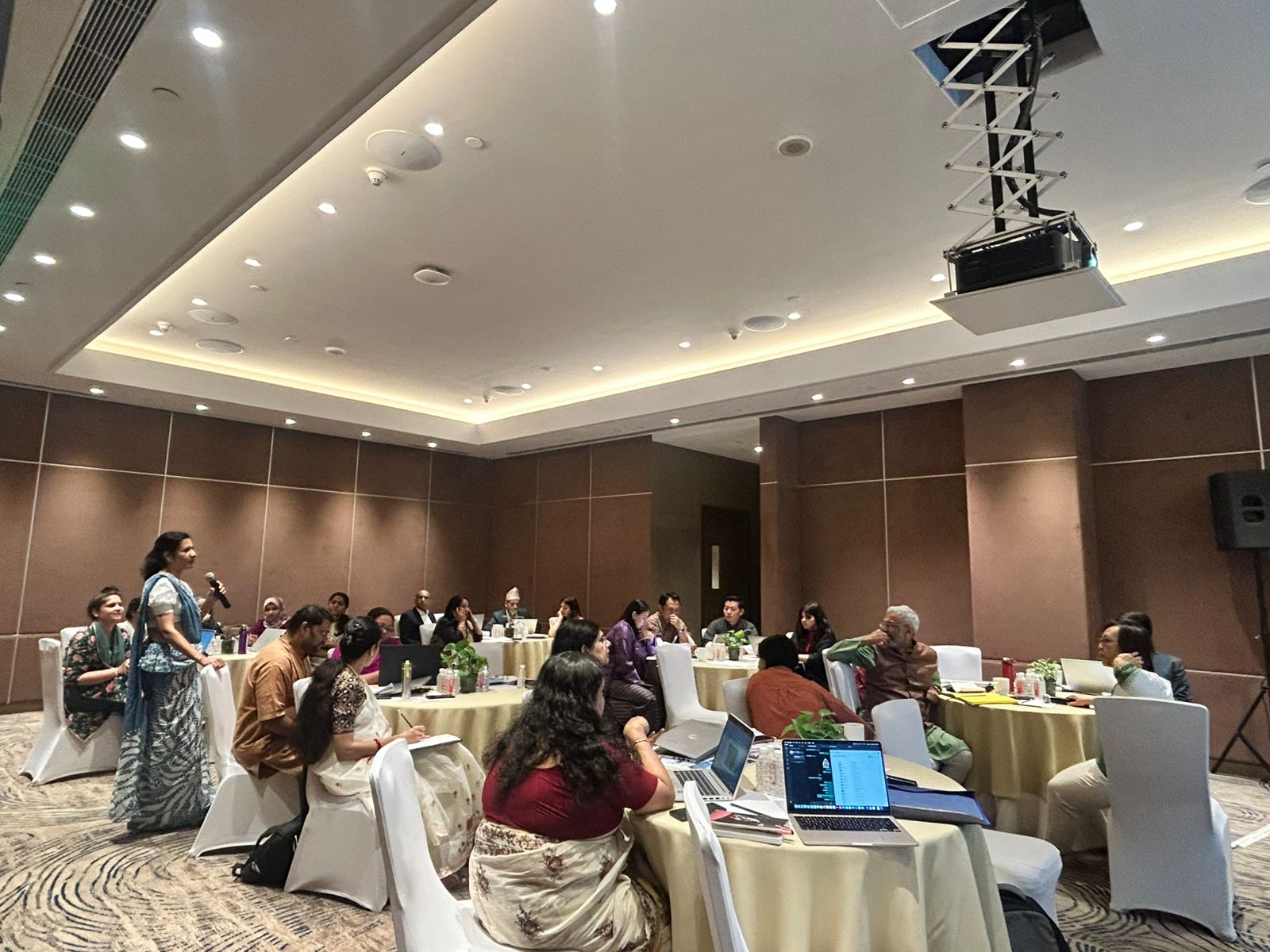
UNESCO Workshop Brief Report, 27-28 May 2025
Title: ESD-NET Regional Workshop for South-Asian Member States
Location: New Delhi
Dates: 27th – 28th May 2025
Workshop Overview
The regional workshop aimed to support South Asian Member States in implementing Education for Sustainable Development (ESD) for 2030, with a particular focus on greening education systems. Participants engaged in mapping national education policies and curricula against two key UNESCO guidance documents using the Greening Education Partnership (GEP) Framework.
The expected outcome is a final report highlighting opportunities and challenges in adopting the UNESCO Greening Curriculum Guidance and the Green School Quality Standard.
The workshop was addressed by Mr. Kartikeya Sarabhai where he represented SASEANEE (South Asia and South East Asia Network for Environmental Education) with the introduction of the network and announcing it as the South Asia Regional Hub of the Global Environmental Education Partnership (GEEP).
SASEANEE materials—including bookmarks, brochures, and circulars—were shared with participants from across the region, generating interest from several organizations to engage with the network. The country partners also shared their greening education initiatives in their respective countries.
Key Highlights of Greening Education Activities in the South Asia Region
India
Seeds of Change – SOER 2023: The report assessed India's education system using the GEP Framework. It included best practices, challenges, and ten actionable recommendations for integrating climate action into education.
Policy Consultation Workshop: Held at UNESCO New Delhi, this workshop contributed to developing guidance documents on Greening Curriculum and Greening Schools.
Youth Climate Leadership Programme: A six-month initiative equipping 40 youth with climate knowledge and skills via hybrid training, mentorship, and practical projects, completed in February 2025.
IP2 Project – Nilgiris Biosphere Reserve: Developed a climate literacy toolkit for schools and communities. The kit includes games, flashcards, quizzes, and other interactive materials to foster climate discussions.
Bhutan
IP2 Project – Lampeiri Park: Producing four educational videos on climate awareness and community engagement. Scheduled for launch in late 2025.
South-South Cooperation: Bhutanese officials visited the Nilgiris in April 2025 to learn about greening education initiatives, with plans to adapt them at Lampeiri Education and Interpretation Centre.
Awareness Materials: Climate literacy posters promoting the SDGs were placed in Lampelri National Park by UNESCO SC Division.
Sri Lanka
Greening Committee & Green School Accreditation: Led by UNESCO with the Green Building Council of Sri Lanka and the Ministry of Education to implement the Green School Quality Standard.
ESD Mapping & Consultations (2025): To develop Sri Lanka’s national ESD Country Initiative on Greening Education.
Preparatory Visit – Sinharaja Forest Biosphere Reserve: A scoping mission in March 2025 with the Forest Department for the upcoming 43 C5 IP2 project.
Maldives
Green Schools & Fehl Medrusa Initiative: Collaboration with the Ministry of Education to align with UNESCO Green School Standards. The NIE is set to lead the accreditation process.
Greening Curriculum: Maldives has requested capacity-building support for NIE officials.
GPE Climate Smart Education Systems: Maldives will benefit from this initiative; UNESCO ND is coordinating with IIEP and HQ.
Supporting GEEP Through Regional Engagement:
SASEANEE’s active presence and contributions at the workshop can significantly benefit GEEP in getting regional Insights from South Asian country’s greening education efforts and enrich GEEP’s global knowledge base. It will also help in sharing Innovative projects from India, Bhutan, Maldives, Nepal and Sri Lanka that can serve as replicable models for global dissemination through GEEP platforms. By engaging in the GEP-aligned UNESCO workshop, SASEANEE helps align GEEP’s environmental education vision with national and international policy initiatives.

 Sign In