Our Partners > EEASA
Environmental Education Association of Southern Africa
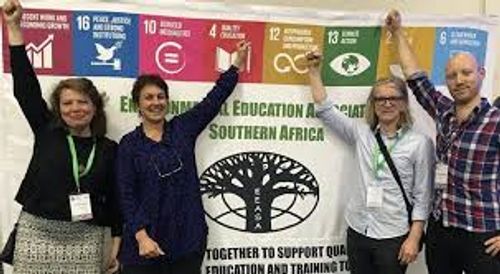
The Environmental Education Association of Southern Africa is a voluntary membership based multi-sectoral and multi-organisational association of educators, researchers, policy makers, students and practitioners.
The Association has been an integral part of the sub-regional evolvement from nature studies, to environmental education, education for sustainable development and its various manifestations, e.g. green economy. EEASA drew on the pioneering role in the practice of environmental education played by other NGOs including the Kalahari Conservation Society in Botswana, the Wilderness Leadership School, the Wildlife Society of South Africa, and the Mlilwane Trust in Swaziland.
EEASA Has Five Main Aims
Act as a responsible body for consultation and coordination on matters of public and professional interest concerning environmental education and sustainability;
Promote interdisciplinary and multidisciplinary studies of the environment;
Promote, organise and sponsor activities and research in environmental education and sustainability;
Disseminate information regarding environmental education and sustainability;
Provide opportunities for the exchange of ideas and opinions on environmental education and sustainability in Southern Africa.
EEASA endeavours to achieve its aims by providing opportunities for the exchange of ideas and opinions environmental education, deepening the understanding of these ideas, and advocating for the southern African voice and scholarship.
Our Programs
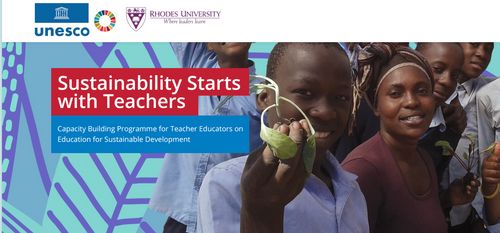
The Sustainability Starts with Teachers (SST) program
The Sustainability Starts with Teachers (SST) program is a professional capacity-building initiative for teacher educators across Southern Africa. Developed by UNESCO in partnership with Rhodes University and EEASA, it focuses on reorienting teacher education toward the Sustainable Development Goals (SDGs). The program utilizes a "Change Project" model, where participants implement structural sustainability improvements within their own home institutions.
Through its dedicated web portal, the scheme provides an interactive learning space filled with course materials, policy briefs, and "stories of change." By fostering a regional network of educators, SST ensures that environmental literacy is systematically integrated into national school curricula. It serves as a vital tool for scaling Education for Sustainable Development (ESD) across the SADC region.
Read more: https://sustainabilityteachers.org/
Get in
Touch with EEASA
+27 86 425 9102
EEASA Secretariat C/o Environmental Learning Research Centre Department of Education Rhodes University PO Box 94 Grahamstown 6140